
Renting out a spare room in your home offers an excellent opportunity to generate additional income whilst helping someone find affordable accommodation. However, establishing clear expectations from the outset is crucial for a harmonious arrangement. A properly structured room for rent form serves as the foundation for this relationship, protecting both you as the landlord and your tenant by documenting essential terms and conditions in writing. For New Zealand landlords navigating the unique legal landscape in 2026, understanding how to create and implement this document correctly ensures compliance whilst minimising potential disputes.
Understanding the Legal Framework for Room Rentals in New Zealand
When you rent a room in your primary residence, the arrangement typically falls under boarding house provisions rather than standard residential tenancy rules. This distinction matters because different legal requirements apply depending on the nature of the arrangement.
Key legal considerations include:
- Whether you share common areas with the tenant
- The number of rooms you're renting out
- Whether meals or services are provided
- The duration of the intended stay
If you share living spaces and the tenant has access to fewer than six rooms in the property, the Residential Tenancies Act 1986 generally won't apply. Instead, you'll operate under boarding house rules or a simple contractual arrangement. However, when you're not sharing living spaces, standard tenancy laws may apply, requiring you to meet obligations such as providing an inspection checklist and following proper notice periods.
Essential Components of a Room for Rent Form
A comprehensive room for rent form should address all aspects of the living arrangement to prevent misunderstandings. The document needs to balance legal protection with practical clarity.
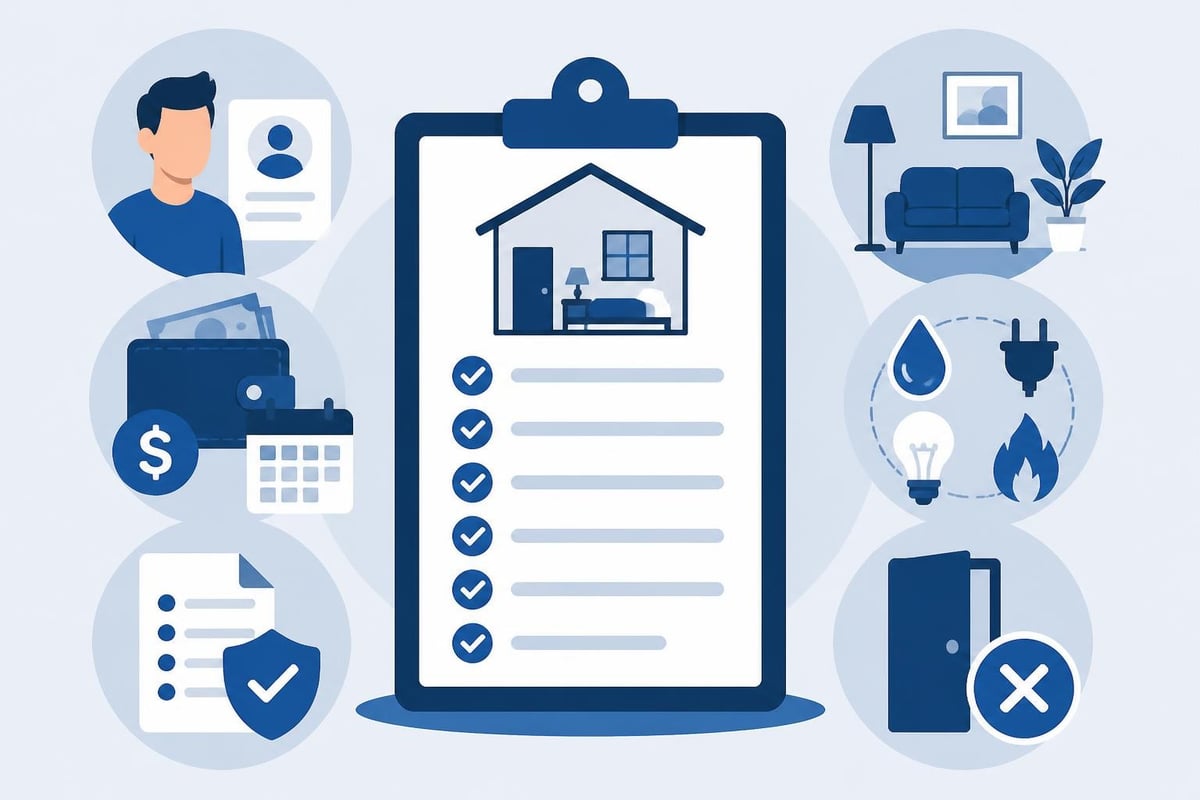
| Component | Details Required | Purpose |
|---|---|---|
| Tenant Information | Full name, contact details, emergency contact | Establishes parties to agreement |
| Rent Terms | Weekly/fortnightly amount, payment date, method | Prevents payment disputes |
| Bond Details | Amount, lodgement process, refund conditions | Protects against damage |
| House Rules | Noise levels, guests, smoking, cleaning | Sets behaviour expectations |
| Utilities | Included services, shared costs | Clarifies financial obligations |
| Notice Period | Termination requirements for both parties | Ensures orderly transitions |
The key components of a room rental agreement extend beyond basic financial terms. Your form should specify which areas of the home the tenant can access, storage allocation, parking arrangements, and internet usage policies.
Crafting Your Room for Rent Form
Creating an effective room for rent form requires careful attention to detail whilst maintaining readability. Start with identifying information for both parties, ensuring you collect proof of identity and references.
Rent and Financial Obligations
Clearly state the weekly or fortnightly rent amount and specify the payment due date. Detail which utilities are included in the rent and which the tenant pays separately. If you're splitting power or internet costs, explain the calculation method to avoid disputes.
Many landlords find it helpful to maintain a clear record of all financial transactions. Using AI-powered tenancy management features can streamline this process, automatically tracking payments and generating receipts.
House Rules and Shared Spaces
This section often determines whether a room rental succeeds or fails. Be specific about expectations regarding:
- Quiet hours and noise levels
- Guest policies (overnight stays, frequency, notification)
- Kitchen and bathroom usage schedules
- Cleaning responsibilities for shared areas
- Laundry access and schedules
- Food storage and labelling requirements

Termination and Notice Requirements
Define how either party can end the arrangement. For boarding situations, you typically have more flexibility than standard tenancies, but fairness and clarity prevent legal complications. Specify the notice period required (commonly 14 to 28 days) and any circumstances that might warrant immediate termination.
Templates and Customisation Considerations
While free room rental agreement templates provide excellent starting points, customisation ensures your form addresses your specific situation. Generic templates may not account for unique features of your property or particular house rules you need to enforce.
Consider these customisation areas:
- Property-specific features – parking allocations, garden access, storage sheds
- Existing household members – children, pets, other boarders
- Special conditions – work-from-home spaces, musical instruments, dietary restrictions
- Seasonal variations – heating costs in winter, garden maintenance expectations
Before implementing your room for rent form, review it against current 2026 regulations. Legislative changes can affect boarding arrangements, particularly around health and safety standards. Always verify critical details on tenancy.govt.nz for the most current guidance.
Implementation and Documentation Best Practices
Once you've drafted your room for rent form, proper execution ensures its validity. Both parties should sign and date the document, with each retaining a copy. Consider having signatures witnessed, particularly for longer-term arrangements.
Documentation checklist:
- Completed and signed room for rent form (two copies)
- Photo identification from the tenant
- Bond receipt (if applicable)
- Inventory of room contents and condition
- Copies of house keys issued
- Utility meter readings at move-in
The proper completion and signing process helps establish the agreement's legitimacy should disputes arise later. Photograph the room's condition before the tenant moves in, documenting any existing damage or wear.
Ongoing Management and Communication
A room for rent form isn't a set-and-forget document. Regular communication maintains positive relationships and addresses issues before they escalate. Schedule periodic check-ins to discuss how the arrangement is working and whether any adjustments are needed.
Modern landlords increasingly rely on digital tools to manage their properties efficiently. Compliance tracking and automated notices reduce administrative burden whilst ensuring you meet all legal obligations.

Common Pitfalls to Avoid
Even experienced landlords encounter challenges with room rentals. Understanding common mistakes helps you avoid them:
Never skip documenting the agreement in writing. Verbal arrangements inevitably lead to misunderstandings about rent amounts, payment dates, or house rules. A written room for rent form protects both parties.
Don't ignore bond requirements. Even for informal arrangements, collecting a bond (typically equivalent to two to four weeks' rent) provides financial security against damage or unpaid rent. Document the bond amount clearly and discuss refund conditions upfront.
Avoid vague house rules. Stating that guests should be "reasonable" or noise should be "minimal" invites interpretation conflicts. Specify exactly what you mean: "No guests after 10 PM on weekdays" or "Music and television volume should not be audible from hallways after 9 PM."
Don't neglect safety obligations. Regardless of whether the Residential Tenancies Act applies, you must maintain a safe living environment. Ensure smoke alarms function, electrical systems are safe, and heating is adequate during winter months.
Implementing a comprehensive room for rent form establishes clear expectations and protects everyone involved in shared accommodation arrangements. For New Zealand landlords managing room rentals alongside other investment properties, maintaining consistent documentation and compliance can become complex. TenancyIQ streamlines this process with AI-powered tools that handle everything from automated compliance tracking to expense management, letting you focus on creating positive tenancy relationships rather than drowning in paperwork.