
Managing rental properties in New Zealand requires a solid understanding of the legal framework that governs landlord-tenant relationships. The tenancy laws NZ enforces through the Residential Tenancies Act 1986 and subsequent amendments provide clear guidelines for both parties, ensuring fair treatment and proper procedures. For self-managing landlords, staying compliant with these regulations is not just about avoiding penalties-it's about creating professional, legally sound tenancy arrangements that protect your investment whilst respecting tenant rights.
Understanding the Residential Tenancies Act Framework
The Residential Tenancies Act 1986 forms the cornerstone of tenancy laws NZ landlords must follow. This legislation sets out the rights and responsibilities for both landlords and tenants, covering everything from bond management to maintenance obligations.
The Residential Tenancies Amendment Act 2020 introduced significant changes that continue to shape rental property management in 2026. These amendments strengthened tenant protections whilst clarifying landlord responsibilities around property standards and termination procedures.
Key areas covered by the Act include:
- Tenancy agreements and their required terms
- Bond lodgement and refund processes
- Notice periods for various circumstances
- Maintenance and repair obligations
- Rent increase limitations and procedures
Understanding who is protected under the Residential Tenancies Act helps landlords determine whether their rental arrangement falls within the legislation's scope. Most residential tenancies are covered, though some exceptions exist for boarding houses and certain short-term arrangements.
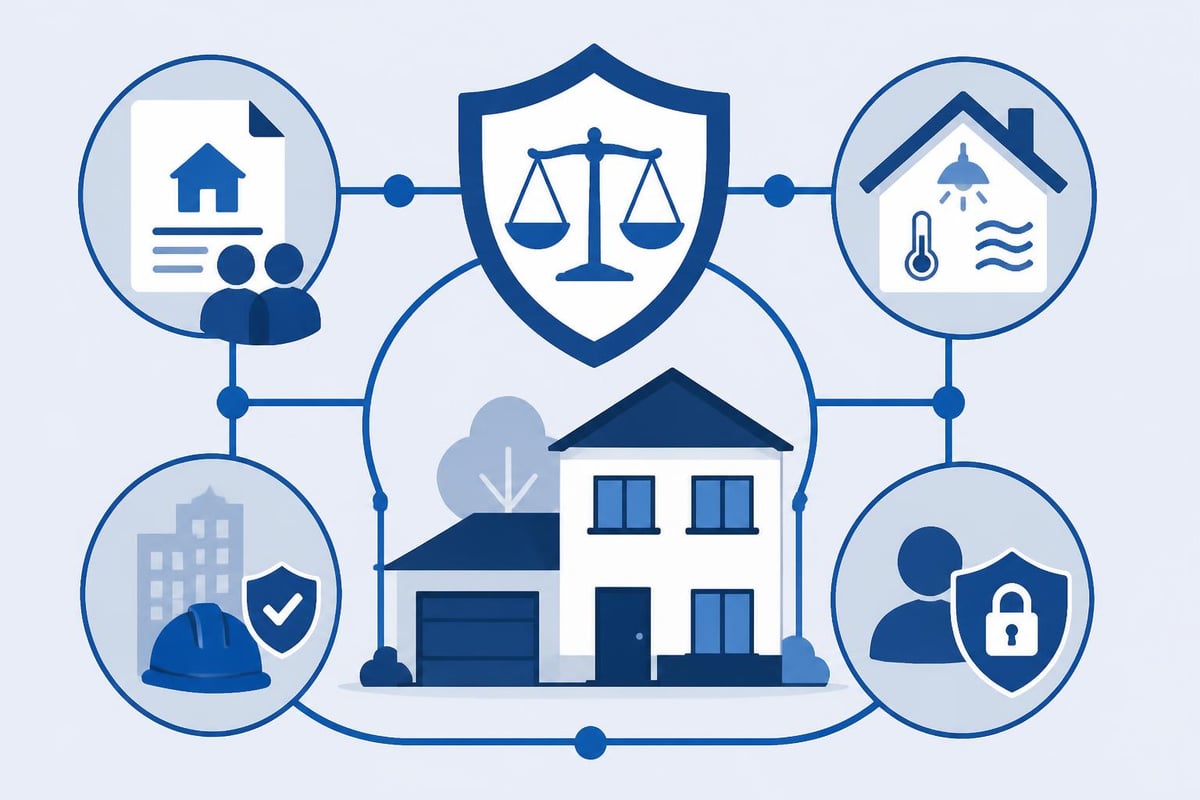
Compliance Requirements for Rental Properties
Compliance with tenancy laws NZ extends beyond the core Residential Tenancies Act to encompass multiple pieces of legislation. Landlords must navigate several regulatory requirements simultaneously to operate legally.
Healthy Homes Standards
Since July 2021, all rental properties must meet the Healthy Homes Standards, which remain in full effect throughout 2026. These standards cover five key areas: heating, insulation, ventilation, moisture ingress and drainage, and draught stopping.
Landlords face penalties for non-compliance, making it essential to conduct thorough assessments and maintain documentation. Many self-managing landlords find that tenancy management solutions help track compliance deadlines and required inspections.
Building and Safety Laws
The laws and bylaws landlords must comply with include Building Act requirements, council bylaws, and safety regulations. Properties must have functioning smoke alarms, meet electrical safety standards, and maintain structural integrity.
| Compliance Area | Key Requirements | Documentation Needed |
|---|---|---|
| Healthy Homes | Five standards met by deadline | Compliance statements, receipts |
| Smoke Alarms | Working alarms in required locations | Testing records |
| Insulation | Ceiling and underfloor where accessible | Insulation statements |
| Building Warrants | Current WoFs where applicable | Inspection certificates |
Bond Management and Financial Obligations
Proper handling of tenancy bonds represents a critical aspect of tenancy laws NZ landlords must master. Bonds must be lodged with Tenancy Services within 23 working days of receipt, and detailed records must be maintained throughout the tenancy.
The bond lodgement process requires accurate documentation, including tenant details, property address, and bond amount. Failure to lodge bonds correctly can result in penalties and complications when tenancies end.
Bond refund considerations:
- Both parties must agree on deductions
- Disputes go to Tenancy Services mediation
- Landlords must provide evidence for claimed damages
- Normal wear and tear cannot be deducted
Notice Periods and Tenancy Termination
Understanding notice period requirements under tenancy laws NZ prevents costly mistakes and potential Tenancy Tribunal claims. The 2020 amendments removed no-cause terminations, meaning landlords now need specific grounds to end periodic tenancies.
Valid Termination Grounds
Landlords can terminate tenancies for reasons including property sale, family member occupancy, significant renovations, or tenant breaches. Each ground carries specific notice period requirements and documentation standards.
Notice to remedy procedures must follow prescribed formats and timeframes. Landlords issuing notices for rent arrears or other breaches need to allow tenants 14 days to remedy the situation before proceeding further.

Rent Increases and Payment Terms
The rent increase rules within tenancy laws NZ require landlords to follow strict procedures. Rent can only be increased once every 12 months, with 60 days' written notice required for both periodic and fixed-term tenancies.
Increases must be proportionate and reasonable, considering market conditions and property improvements. Tenants can challenge excessive increases through the Tenancy Tribunal, which will assess whether the proposed rent aligns with market rates for comparable properties.
Payment and Receipt Requirements
Landlords must provide receipts when requested and cannot charge fees for standard payment methods. Rent payment terms should be clearly stated in the tenancy agreement, typically weekly or fortnightly to align with tenant income patterns.
Maintenance and Inspection Protocols
Tenancy laws NZ place clear maintenance obligations on landlords. Properties must be maintained in a reasonable state of repair, with repairs completed within reasonable timeframes after notification.
Regular property inspections help identify maintenance issues early, but landlords must provide 48 hours' notice before entering the property. Inspections should occur no more frequently than every four weeks, though this may vary for valid reasons.
| Inspection Type | Notice Required | Maximum Frequency |
|---|---|---|
| Routine inspection | 48 hours | Every 4 weeks |
| Maintenance access | 24 hours | As needed |
| Emergency repairs | None | When required |
| Final inspection | Reasonable notice | End of tenancy |
Dispute Resolution Through the Tenancy Tribunal
When disagreements arise, the Tenancy Tribunal provides a formal dispute resolution process. Both landlords and tenants can apply to the Tribunal for orders on various matters, from unpaid rent to unlawful terminations.
Understanding Tribunal procedures helps landlords prepare effectively. Applications require specific documentation, and hearings follow structured formats where both parties present evidence.

Most disputes benefit from mediation before reaching a hearing. Tenancy Services offers free mediation services that resolve many issues without formal Tribunal intervention.
Fixed-Term vs Periodic Tenancies
Choosing between fixed-term and periodic tenancies affects how tenancy laws NZ apply to termination and rent increases. Fixed-term agreements run for a specified period, whilst periodic tenancies continue indefinitely until either party provides notice.
Fixed-term agreements automatically convert to periodic tenancies unless both parties sign a new agreement or provide proper notice to terminate. This conversion happens seamlessly, with all terms continuing except the end date.
Considerations for each type:
- Fixed-term provides certainty but limits flexibility
- Periodic allows either party to end with proper notice
- Rent increases follow different notice requirements
- Termination grounds vary between types
Documentation and Record-Keeping Best Practices
Effective management of tenancy laws NZ compliance requires systematic documentation. Landlords should maintain comprehensive records of all communications, notices, inspections, maintenance requests, and financial transactions throughout each tenancy.
Digital solutions streamline this process, with modern tenancy management platforms automating record-keeping and compliance tracking. Proper documentation proves invaluable if disputes arise or Tribunal applications become necessary.
Essential records include tenancy agreements, condition reports, correspondence logs, repair receipts, and notice copies. These documents should be organised chronologically and backed up securely to ensure accessibility when needed.
Navigating tenancy laws NZ requires attention to detail, systematic compliance, and proper documentation across multiple regulatory requirements. Self-managing landlords face significant administrative demands, from tracking Healthy Homes compliance to managing notice periods and maintaining inspection records. TenancyIQ simplifies these complexities through AI-powered automation that handles compliance tracking, generates legally compliant notices, and maintains comprehensive records-allowing you to focus on property management rather than paperwork whilst ensuring full regulatory compliance.