
Issuing a rent increase notice is one of the most sensitive tasks self-managing landlords face. Whether you're adjusting rent to reflect market conditions or covering rising property costs, understanding New Zealand's legal framework is essential to maintaining positive tenant relationships whilst protecting your investment. As of 2026, the rules governing rent increases remain strict, requiring careful attention to timing, documentation, and communication.
Understanding New Zealand's Rent Increase Requirements
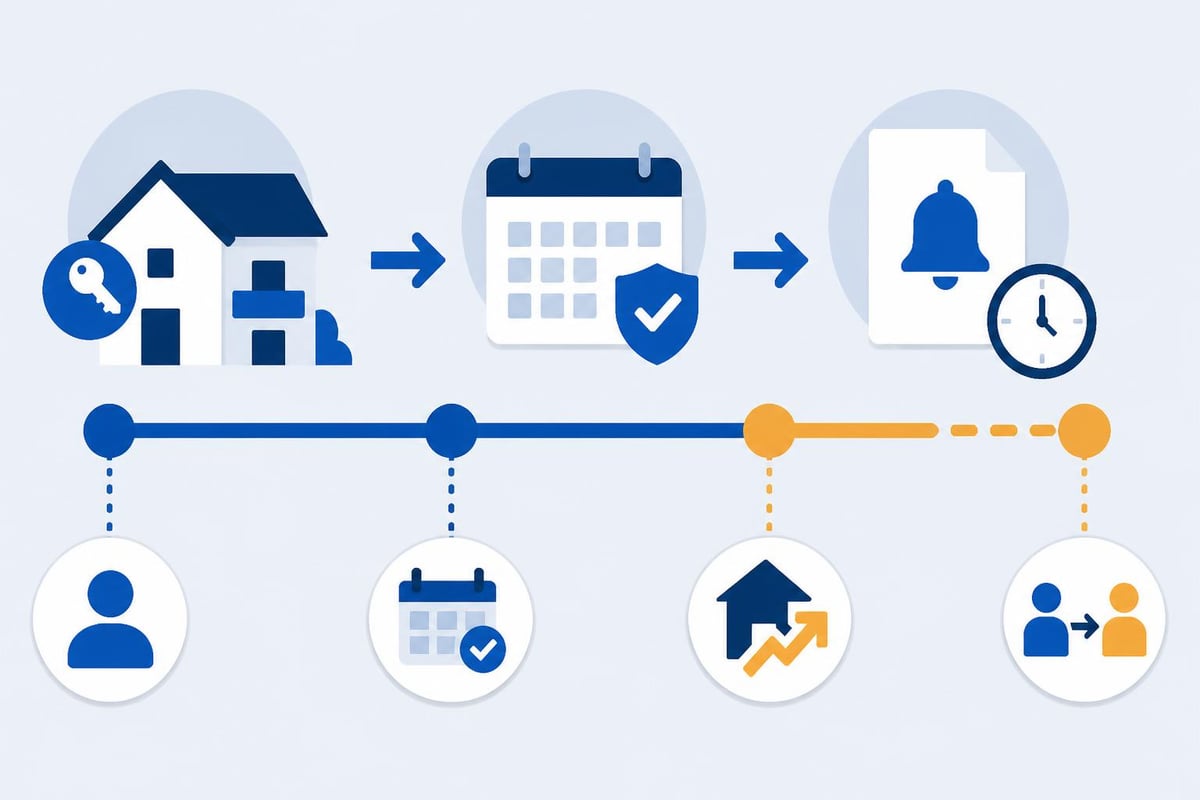
New Zealand law provides clear protections for tenants whilst allowing landlords to adjust rent fairly. A rent increase notice can only be issued once every 12 months for both periodic and fixed-term tenancies. This 12-month period begins from the tenancy start date or the date the last increase took effect, not from when the notice was given.
The notice period itself is equally important. Landlords must provide 60 days' written notice before any rent increase takes effect. This timeline cannot be shortened, even if the tenant agrees. These requirements apply to all residential tenancies governed by the Residential Tenancies Act 1986.
Key compliance points:
- Minimum 12-month gap between increases
- Exactly 60 days' written notice required
- Must use prescribed Tenancy Services form
- Cannot coincide with fixed-term renewal negotiations
For landlords managing multiple properties, tracking these dates manually can become overwhelming. Understanding rent increase rules in New Zealand helps ensure you remain compliant whilst managing your portfolio efficiently.
Drafting Your Rent Increase Notice
The Ministry of Business, Innovation and Employment (MBIE) provides an official form for rent increases that landlords must use. This standardised document ensures all legal requirements are met and creates a clear paper trail for both parties.
Your rent increase notice must include specific information to be valid. The current rent amount, the new rent amount, and the exact date the increase takes effect are all mandatory fields. You must also clearly state the 60-day notice period and ensure the tenant understands their rights.
| Required Element | Details | Common Mistakes |
|---|---|---|
| Current rent | Weekly or fortnightly amount | Omitting payment frequency |
| New rent | Exact increased amount | Unclear effective date |
| Effective date | Specific calendar date | Counting from wrong start point |
| Notice period | 60 days clearly stated | Insufficient notice given |
| Property address | Complete legal address | Using abbreviated forms |
Whilst international resources like sample rent increase notification letters can provide inspiration, always ensure your notice complies with New Zealand's specific requirements. The official MBIE form is available through Tenancy Services and should be your primary template.
Determining a Fair Rent Increase
Market rent in New Zealand has fluctuated significantly in recent years, with regional variations creating complex pricing landscapes. Before setting your new rent amount, research comparable properties in your area, considering location, size, condition, and amenities.
The Tenancy Tribunal can review rent increases if a tenant challenges the amount as excessive. Whilst there's no statutory cap on increases in most situations, the Tribunal considers whether the new rent aligns with market rates for similar properties.
Factors justifying rent increases:
- Significant property improvements or renovations
- Rising council rates, insurance, or maintenance costs
- Market rent increases in your specific area
- Compliance upgrades like Healthy Homes standards
Documentation becomes crucial if your increase is challenged. Keep records of comparable properties, receipts for improvements, and evidence of increased costs. The features of modern tenancy management platforms often include expense tracking that can support these justifications.

Timing and Communication Strategies
Beyond legal requirements, strategic timing can significantly impact how tenants receive a rent increase notice. Avoid issuing notices during difficult personal circumstances if you're aware of them, and consider the broader economic context.
Many experienced landlords schedule increases for specific times of year. January increases align with annual budgeting cycles, whilst avoiding December respects the holiday period. Mid-year increases may coincide with property anniversary dates, making tracking simpler across multiple properties.
Best practice communication steps:
- Prepare documentation: Gather market research and cost justifications before drafting
- Use official forms: Complete the MBIE rent increase notice accurately
- Deliver properly: Hand-deliver, post, or email (if agreed) with proof of receipt
- Follow up: Contact tenant after one week to address questions
- Document everything: Keep copies of all correspondence and delivery confirmation
Understanding requirements across different jurisdictions, such as those outlined in rent increase notice requirements by state, highlights how New Zealand's approach differs from overseas models, reinforcing the need for local compliance.
Managing Fixed-Term Versus Periodic Tenancies
The type of tenancy significantly affects how rent increases work. For periodic tenancies, the process is straightforward: provide 60 days' notice with at least 12 months since the last increase.
Fixed-term tenancies present more complexity. You cannot increase rent during a fixed term unless the tenancy agreement specifically allows it and states the amount or calculation method. Most fixed-term agreements don't include this provision, meaning rent remains locked until the term ends.
| Tenancy Type | During Term | At Renewal | Notice Requirements |
|---|---|---|---|
| Periodic | Anytime (12-month gap) | N/A | 60 days |
| Fixed-term (no clause) | Not permitted | Can increase | New agreement or 60 days if continuing |
| Fixed-term (with clause) | Only as specified | Can increase | As per agreement |
When a fixed-term tenancy expires, you have options. You can negotiate a new rent as part of a fresh fixed-term agreement, or if the tenancy becomes periodic, you must follow the standard 60-day notice process. Learn more about fixed-term versus periodic tenancy structures to determine which suits your property management style.
Common Mistakes and How to Avoid Them
Self-managing landlords frequently encounter pitfalls when issuing rent increase notices. The most common error is miscalculating the 12-month waiting period, particularly when previous increases weren't tracked accurately.
Insufficient notice periods create another frequent problem. Some landlords count 60 days from when they decide to increase rent rather than from when the notice is properly delivered. This can invalidate the entire increase, forcing landlords to start the process again.
Frequent compliance failures:
- Using incorrect or outdated notice forms
- Failing to keep proof of delivery
- Attempting increases during fixed terms without contractual provision
- Not maintaining records of previous increase dates
- Issuing increases as retaliation for tenant complaints
Templates from resources like rent increase letter guides can be helpful starting points, but must be adapted to New Zealand's legal framework. Always verify your notice against current Tenancy Services requirements before delivery.

Record-Keeping and Compliance Documentation
Maintaining thorough records protects landlords if disputes arise. Every rent increase notice should be filed with supporting documentation including market research, delivery confirmation, and tenant acknowledgment if provided.
Digital record-keeping has transformed property management. Rather than managing paper files across multiple properties, modern systems centralise all tenancy documents, automatically track notice periods, and generate compliant forms. This reduces the administrative burden whilst improving compliance accuracy.
Your rent increase notice file should include the completed official form, proof of delivery (registered post receipt or email confirmation), market research supporting the increase amount, records of property improvements, and any tenant correspondence regarding the increase.
For self-managing landlords handling multiple properties, automated reminders ensure the 12-month gaps are respected and 60-day notice periods begin on time. The TenancyIQ platform demonstrates how AI-powered solutions can track these compliance requirements across entire portfolios without manual calendar management.
Issuing a rent increase notice requires balancing legal compliance, market realities, and tenant relationships. By understanding New Zealand's 60-day notice requirement, respecting the 12-month gap between increases, and maintaining thorough documentation, you can manage rent adjustments professionally and lawfully. For self-managing landlords seeking to streamline compliance whilst reducing administrative overhead, TenancyIQ automates notice generation, tracks critical dates, and ensures every rent increase follows New Zealand's tenancy laws precisely.