
Selecting the right tenant is one of the most critical decisions a self-managing landlord faces. A comprehensive rental application provides the foundation for this choice, gathering essential information about prospective tenants while establishing professional boundaries from the first interaction. Free rental application templates offer New Zealand landlords a practical starting point, though understanding which elements to include and how to adapt them for local compliance requirements remains essential.
Understanding Rental Application Essentials
A well-designed rental application serves multiple purposes beyond simply collecting names and contact details. It creates a structured process for evaluating applicants, demonstrates professionalism, and establishes documentation that supports fair, consistent decision-making.
New Zealand landlords must balance thoroughness with privacy requirements under the Privacy Act 2020. Applications should request information directly relevant to assessing tenancy suitability whilst avoiding questions about protected characteristics that could suggest discrimination.
Core Information Categories
Personal identification details form the foundation of any application. Full legal names, date of birth, contact information, and current address allow landlords to verify identity and maintain communication throughout the screening process.
Rental history provides insights into tenancy behaviour. Previous addresses, landlord references, and reasons for leaving help identify patterns that predict future conduct. Tenant Background Check provides comprehensive screening services that complement application data.
Employment and income verification ensures applicants can afford the rent. Current employer details, position, length of employment, and gross income allow landlords to assess financial stability. Many professionals recommend rent should not exceed 30% of gross household income.
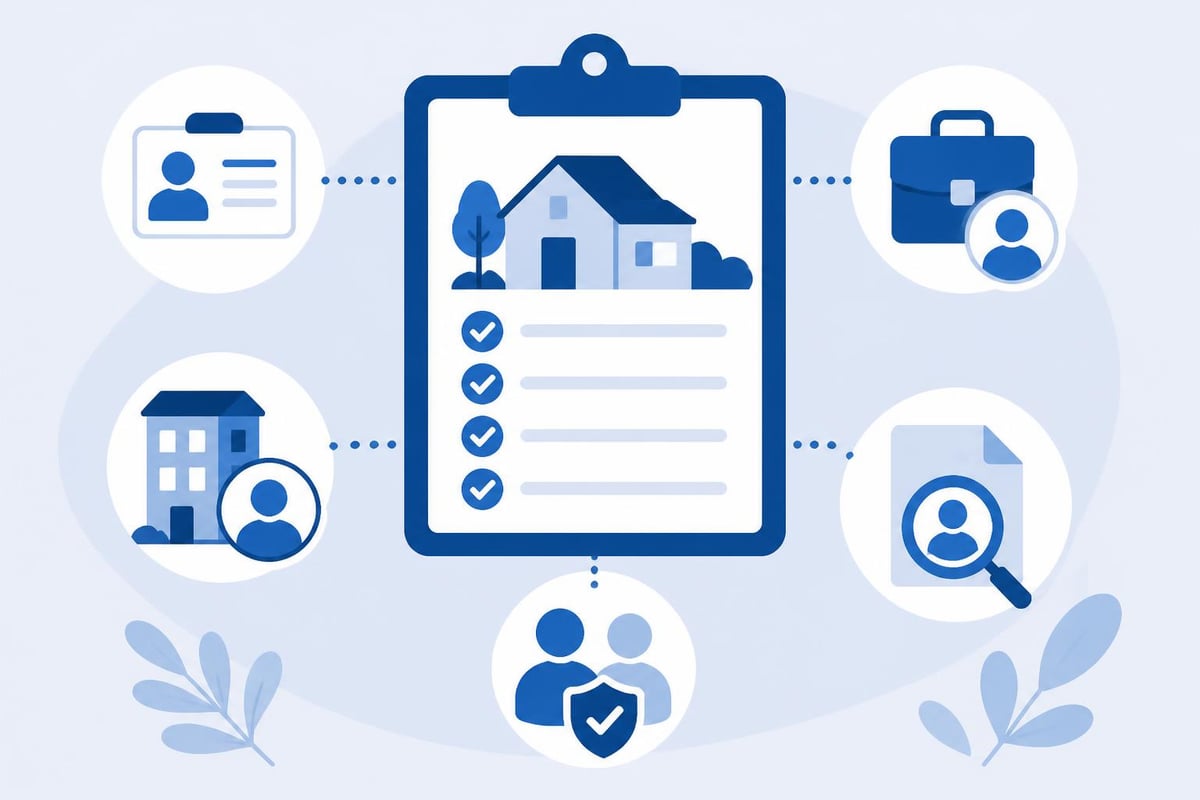
Finding Quality Free Templates
The availability of free rental application templates has expanded significantly, though quality and jurisdictional relevance vary considerably. Self-managing landlords benefit from understanding which sources offer reliable, professionally designed forms.
Jotform's online rental application builder provides over 90 customisable templates with electronic signature capabilities. The platform's drag-and-drop interface allows landlords to modify fields without technical expertise.
Forms.app offers 28 rental application templates covering various scenarios from residential to short-term rentals. These digital forms automatically organise responses, streamlining comparison between multiple applicants.
For landlords preferring traditional PDF formats, several providers offer downloadable options. These work well for landlords who process applications manually or prefer paper-based record systems.
Template Customisation Considerations
| Aspect | Standard Template | Customised for NZ |
|---|---|---|
| Currency | Often USD | NZD required |
| Date Format | MM/DD/YYYY | DD/MM/YYYY preferred |
| References | Generic "landlord" | Previous property manager or agent |
| Legal Terms | May reference foreign laws | Must align with Residential Tenancies Act 1986 |
Free rental application templates typically require modification to suit New Zealand's regulatory environment. Understanding compliance requirements helps landlords adapt generic templates appropriately.
Digital Versus Paper Applications
The choice between digital and paper applications affects efficiency, accessibility, and record-keeping. Each approach offers distinct advantages depending on landlord preferences and property portfolio size.
Digital applications streamline collection and organisation. Prospective tenants complete forms online at their convenience, reducing barriers to application. Automated systems can flag incomplete submissions or validate data formats immediately.
- Responses automatically organised in spreadsheets
- Integration with screening services possible
- Reduced paper storage requirements
- Accessible from mobile devices
- Time-stamped submissions provide application timeline
Paper applications maintain traditional workflows some landlords prefer. Physical documents may feel more formal to certain demographics, and some applicants lack reliable internet access.
123FormBuilder's templates can be embedded directly on property listing websites, capturing applications as prospects view advertisements. This integration reduces friction in the application process.

Privacy and Legal Compliance
New Zealand's Privacy Act 2020 establishes clear requirements for collecting, storing, and using personal information. Rental applications request sensitive data, making compliance essential for avoiding legal complications.
Applications must clearly state the purpose of collection and how information will be used. Standard privacy statements explain that data will be used for tenant screening, reference checking, and tenancy management if the application succeeds.
Applicants must consent to background checks, credit inquiries, and reference contacts. Avail's rental application forms include consent clauses, though landlords should verify alignment with New Zealand requirements.
Information Retention Guidelines
Successful applicants: Applications become part of tenancy records, retained throughout the tenancy and typically for seven years after termination to support potential disputes.
Unsuccessful applicants: Privacy principles suggest retaining applications only as long as necessary. Many landlords delete or destroy unsuccessful applications within three to six months unless specific circumstances warrant longer retention.
The Residential Tenancies Act 1986 prohibits discrimination based on protected characteristics. Applications should avoid questions about race, religion, sexual orientation, or family status unless directly relevant to occupancy limits.
Streamlining the Application Process
Efficient application processing helps landlords fill vacancies quickly whilst maintaining thorough screening standards. Free rental application templates form one component of a broader tenant selection workflow.
Creating standardised evaluation criteria before advertising properties ensures consistent, fair assessment. Scoring systems based on rental history, income stability, and references reduce subjective bias and support defensible decisions.
Processing workflow steps:
- Pre-screen inquiries to ensure basic eligibility
- Distribute application forms to qualified prospects
- Review completed applications for completeness
- Conduct reference checks with previous landlords
- Verify employment and income claims
- Run appropriate background checks
- Make selection based on predetermined criteria
- Notify all applicants of outcomes
Managing notice periods and understanding fixed-term versus periodic tenancies helps landlords plan transition timelines when selecting new tenants.
Template Modification Best Practices
Generic free rental application templates require thoughtful adaptation for New Zealand use. Simply downloading and using templates designed for other jurisdictions risks collecting irrelevant information whilst missing crucial local requirements.
Essential modifications include:
- Converting currency references to NZD
- Adjusting date formats to DD/MM/YYYY
- Removing questions about social security numbers or foreign identification systems
- Adding fields for IRD numbers if required for tax purposes
- Including questions about smoking (relevant for property condition)
- Requesting vehicle information for parking allocation
Rentto's state-specific forms demonstrate the importance of jurisdictional customisation, though their US focus limits direct applicability for New Zealand landlords.

Technology platforms increasingly integrate rental applications with broader property management functions. Rather than treating applications as standalone documents, modern systems connect them to inspection checklists, bond lodgement processes, and ongoing tenancy administration.
Balancing Thoroughness With Efficiency
Comprehensive applications provide valuable screening data, but excessively long forms deter quality applicants in competitive markets. Finding the right balance between detail and accessibility affects both application completion rates and screening effectiveness.
Research suggests applications requiring more than 15 minutes to complete see significantly higher abandonment rates. Prioritising essential information in initial applications, with supplementary details requested later in the process, maintains engagement whilst gathering necessary data.
| Information Type | Initial Application | Follow-up if Shortlisted |
|---|---|---|
| Personal details | ✓ | |
| Current address | ✓ | |
| Employment summary | ✓ | |
| Rental history (2 years) | ✓ | |
| Detailed employment verification | ✓ | |
| Extended rental history | ✓ | |
| Character references | ✓ | |
| Detailed financial information | ✓ |
Professional landlords recognise that tenant screening extends beyond applications. Reference conversations, credit checks, and interview discussions provide context that paper forms cannot capture.
Understanding property management costs helps self-managing landlords appreciate the value of efficient application systems that reduce time investment whilst maintaining screening quality.
Free rental application templates provide valuable starting points for New Zealand landlords establishing professional tenant screening processes. Customising these templates for local compliance requirements whilst integrating them into efficient workflows supports better tenancy outcomes. TenancyIQ streamlines the entire tenant management lifecycle beyond just applications, offering AI-powered solutions that handle compliance, documentation, and ongoing property administration. Explore how intelligent automation can transform your self-managing landlord experience whilst maintaining the professional standards today's rental market demands.